
Drop us a line today for a free quote!
Financing
Understanding your financing options is a key step in the home buying process. The right loan can impact your monthly payment, interest rate, and overall affordability. Jim works closely with trusted local lenders who can help you explore the various loan programs available and get you pre-approved.
Get Preapproved First
A mortgage pre-approval helps you:
- Know how much home you can afford
- Strengthens your offer in a competitive market
- Create a clear understanding of your total monthly payment, including principal, interest, taxes, and insurance, so that you can be confident the home you are purchasing fits within your budget.

Financing Options May Include
- Conventional Loans
- FHA Loans
- VA Loans
- PHFA Loans
- USDA Loans
- Jumbo Loans
- Specialty Programs may be available based on your occupation, such as special financing for medical professionals.
Your lender will help you determine which option best fits your financial goals.
Down Payment and Closing Costs
Many buyers are surprised to learn they may not need 20% down. Depending on the loan program, there may be low down payment options and assistance programs available.
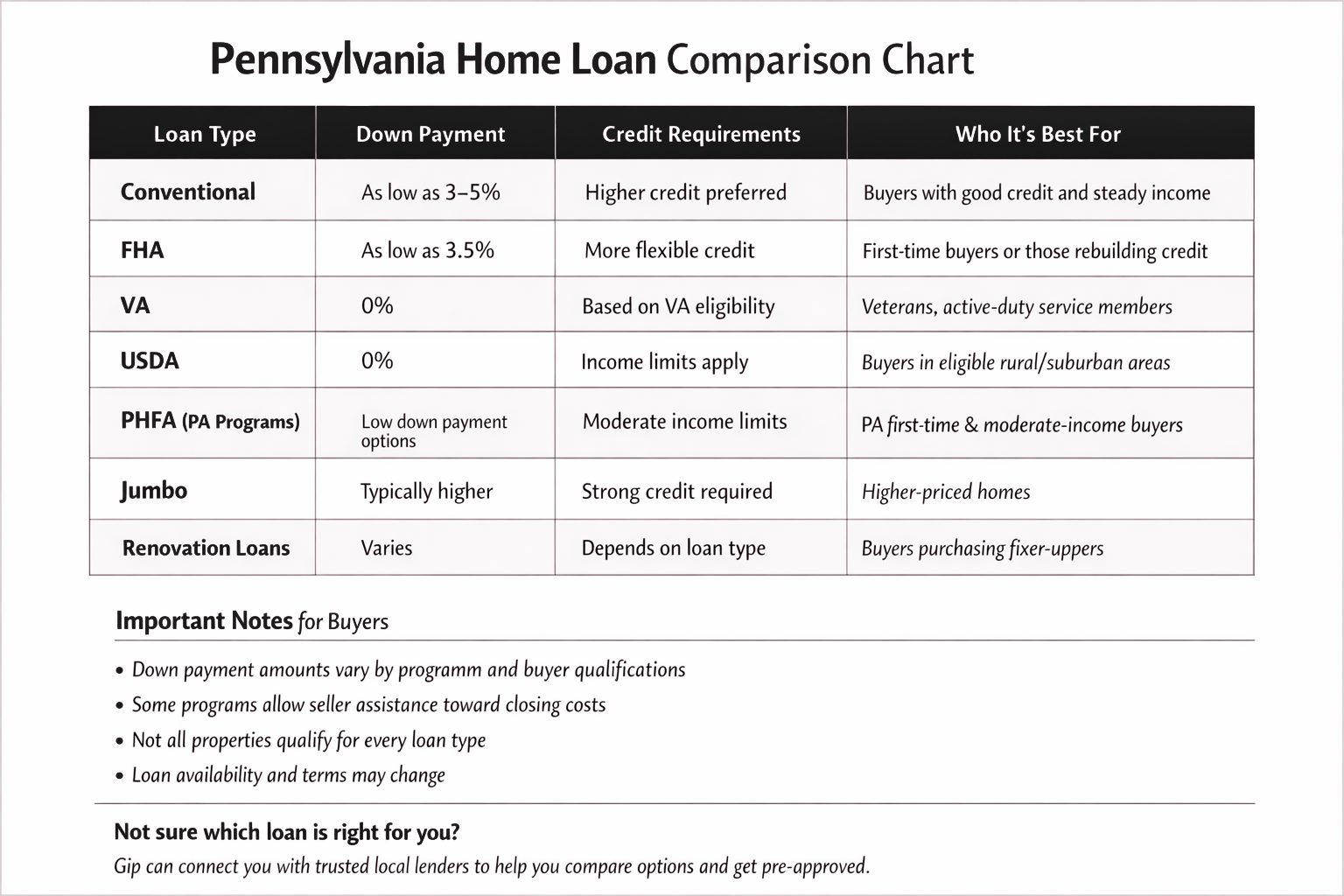
Which Loan Is Right For You?
The best loan depends on your credit score, income and debt, how much money you have saved, property location, and your long-term goals.
A trusted local lender can review your options and help you choose the loan program that fits your financial goals.

First Time Homebuyer FAQs
You may be surprised to learn that you don't need 20% down. Some loans require as little as 0%-3.5% down. Down payment and closing cost assistance programs may be available.
Closing costs vary depending on the purchase price of the house, the location, and the real estate taxes.
In a seller's market, seller assistance with closing costs is uncommon.
In a balanced or buyer's market, seller concessions may be negotiable depending on the terms of the contract.
A typical first-time home purchase can be completed in as little as 30 days from pre-approval to closing.
Yes, lenders look at your Debt-To-Income Ratio, not just whether you have debt. Many first-time buyers qualify while still carrying student loans, car payments, and credit cards.
Some specialty loan programs may offer flexible guidelines and may not count certain student loan debt - such as programs for medical professionals.
After you are pre-approved, it's important to avoid the following: opening new credit accounts, major purchases like cars, furniture, appliances, and changing jobs if possible.
While price matters, it's not always the most important part of a deal. Timing, contingencies, financing terms, and overall flexibility, all of which are negotiable and often play a major role for both buyers and sellers.
In many areas, monthly mortgage payments can be comparable to or even less than rent, while also building equity over time.
Each payment helps build equity which can increase your net worth, be used for future purchases or renovations, and provide financial stability over time.
Not Sure Which Loan Is Right For You? Call Jim Today at 610-207-1996, He Can Connect You With The Right Trusted Local Lender!


Ready to find out more?
© 2026 MoxiWorks
© CENTURY 21 2023 - 2024. All rights reserved. CENTURY 21®, C21® and the CENTURY 21 Logo are registered service marks owned by Century 21 Real Estate LLC. Franchisee Legal Entity Name (not the dba) fully supports the principles of the Fair Housing Act and the Equal Opportunity Act. Each franchise is independently owned and operated. Any services or products provided by independently owned and operated franchisees are not provided by, affiliated with, or related to Century 21 Real Estate LLC nor any of its affiliated companies.
